


List of Poisonous Snakes in North America
Summer outdoor adventures are on everyone’s “to do” list. However, wildlife love summer just as much as we do. One of the biggest questions I always get asked as an avid hiker is, “aren’t you scared of snakes?” No amount of fear of snakes has ever kept me indoors. Knowing what snake species to look out for in your area will ease your worry of a venomous snake bite. Below is some advice on telling the difference between a poisonous snake and a harmless snake as well as a list of poisonous snakes found in North America.
How to tell the difference between venomous and non-venomous snakes
In North America, there are four different varieties of venomous snakes: rattlesnakes, coral snakes, the cottonmouth, and the copperhead. Three of these types of snakes fall under the pit viper category (coral snakes are not pit vipers).
Here are a few ways to tell the difference between a pit viper and a harmless snake:
-
Head
- The head of North American pit vipers is one of the most distinguishable ways to identify these venomous snakes. The head will be flat, not round. The head will also be triangular or diamond-shaped.
-
Pit
- It’s not a pit viper without the pit! The pit is an extra hole that usually sits between the nose and eyes or on either side of the snake’s head.
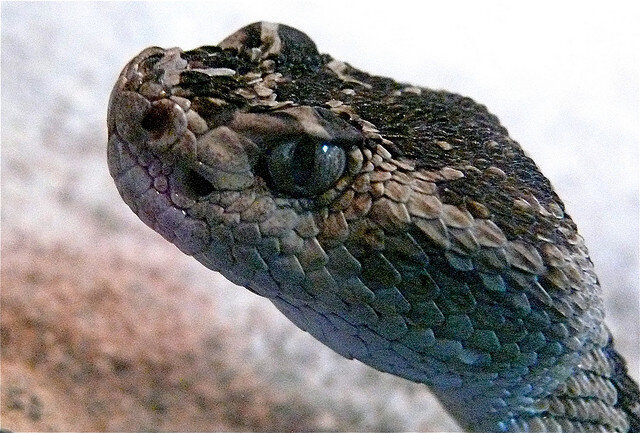
You can clearly see the pit on this Northern Pacific rattlesnake. Photo: Larry & Teddy Page via Flickr
- It’s not a pit viper without the pit! The pit is an extra hole that usually sits between the nose and eyes or on either side of the snake’s head.
-
Eyes
- The eyes of a pit viper are not completely round but slit-like. You can see the eye difference from the picture above compared to the garter snake picture above.
-
Color/Pattern
- Most, not all, pit vipers in North America have varied colors and patterns rather than a solid color. The pattern does vary but many do have stripes, bands, or chevrons. Look below for pictures of pit vipers to see the variety of patterns and colors.
-
Tail
- The best way to identify one type of pit viper, rattlesnakes, is the snake’s tail. Of course, rattlesnakes’ tails will rattle. In my experience with rattle snakes, I have always heard the rattle of the tail before I even see the snake. This a great warning call.
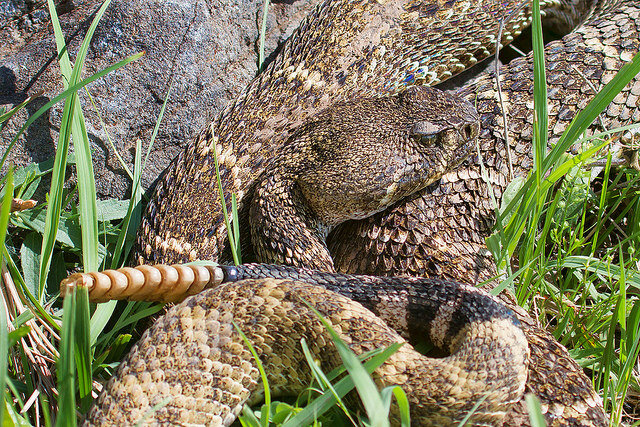
The tail of a Western Diamondback rattlesnake. Photo: Larry Smith via Flickr
- The best way to identify one type of pit viper, rattlesnakes, is the snake’s tail. Of course, rattlesnakes’ tails will rattle. In my experience with rattle snakes, I have always heard the rattle of the tail before I even see the snake. This a great warning call.
-
Fangs
- You might already be doomed if you see the fangs of a pit viper but they are impressive.
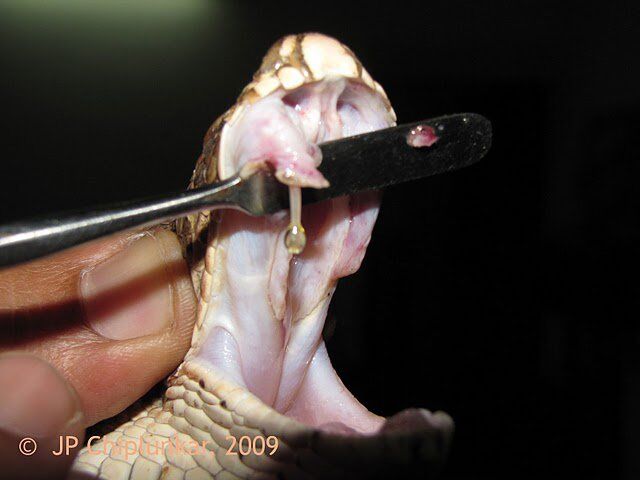
- You might already be doomed if you see the fangs of a pit viper but they are impressive.
How to tell the difference between a coral snake and a harmless snake
A coral snake is not part of the pit viper category. Therefore, the characteristics above will not help you identify this type of venomous snake. However, coral snakes have colorful bands that will catch your attention. Coral snakes have a powerful venom.
-
The color pattern
- The pattern of a coral snake is easily recognizable. However, some non-venomous snakes have the same colors and pattern. You must recognize which color pattern coral snakes have.
- This is how most people remember the color pattern of a coral snake:
- “Red touch yellow, you’re a dead fellow; red touch black, venom lack.”
List of Venomous Snakes in North America
Rattlesnakes
There are more varieties of rattlesnakes in North America but these are the most common. Many of the snakes not listed are subspecies of these snakes and have a smaller geographic range. Colors and patterns vary among the varieties of rattlesnakes. I have come across many rattlesnakes while hiking in rocky terrain or hot climates. I always hear a rattlesnake before I see it. The rattle is enough to make your hair stand on end. The rattle warning is nice but you should still watch your step. You definitely don’t want to catch a rattler by surprise. If you do get bit, it is crucial that you get the antivenom or to a hospital in a timely manner (within 2 hours). Death from rattlesnake bites is rare.
Most Dangerous Rattlesnake: Mojave Rattlesnake
Three Key Features of all Rattlesnakes:
- Triangular-shaped head
- Distinct neck
- Rattle at end of tail
| Name of Snake | Binomial Nomenclature | Geographic Range |
| 1. North Pacific rattlesnake | Crotalus oreganus | Southern British Columbia, Canada, Western United States, Northern Mexico |
| 2. Southern Pacific rattlesnake | Crotalus helleri | Southwest California and northern Mexico |
| 3. Prairie rattlesnake | Crotalus viridis | Southwestern Canada, western United States, northern Mexico |
| 4. Eastern Diamondback rattlesnake | Crotalus adamanteus | Southeastern United States |
| 5. Timber rattlesnake | Crotalus horridus | Eastern United States |
| 6. Mojave rattlesnake | Crotalus scutulatus | deserts of the Southwestern United States |
| 7. Western Diamondback Rattlesnake | Crotalus atrox | United States from Arkansas to California and south of that into Mexico |
| 8. Speckled Rattlesnake | Crotalus mitchellii | Southwestern United States and Mexico |
| 9. Pygmy Rattlesnake | Sistrurus miliarius | Southeastern United States |
| 10. Black-tailed Rattlesnake | Crotalus molossus | Southwestern United States and Mexico |
| 11. Tiger Rattlesnake | Crotalus tigris | Southwestern U.S. and Northwestern Mexico |
| 12. Massasauga | Sistrurus catenatus | Found from Ontario, Canada across to New York, United States, and as far west as Arizona and as far south as Mexico. |
| 13. Sidewinder | Crotalus cerastes | Desert of southwestern U.S. and northwestern Mexico |
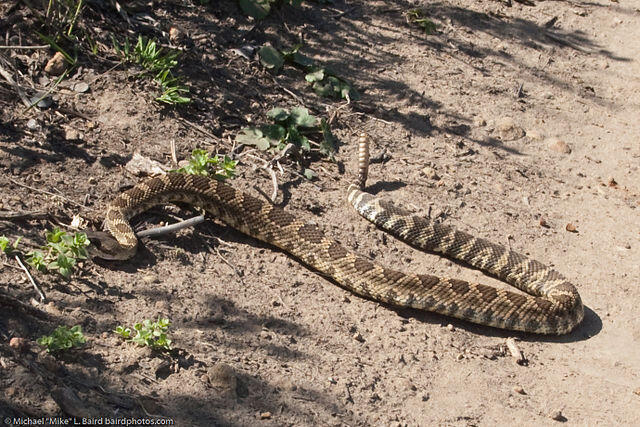
Southern Pacific Rattlesnake (Crotalus viridis helleri)
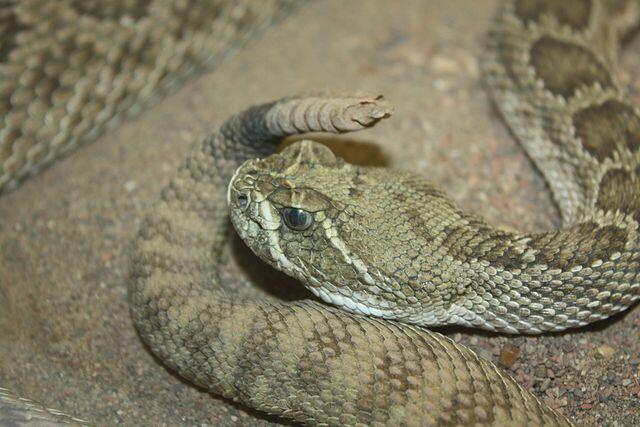
Prairie Rattlesnake. Photo: Trisha
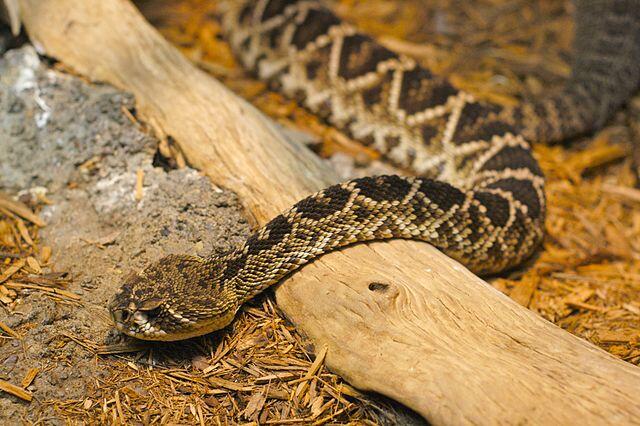
Eastern Diamondback Rattlesnake
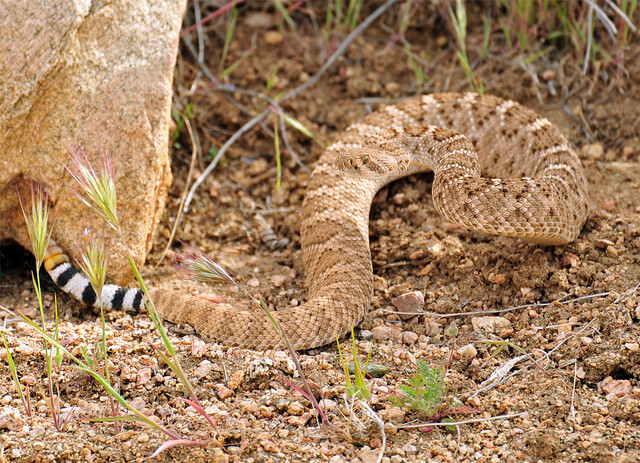
Mojave Rattlesnake. Photo: Andrew (wildlasvegas) via Flickr
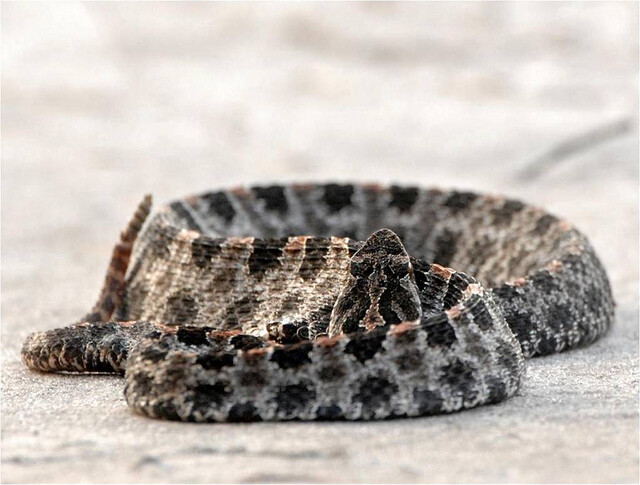
Pygmy rattlesnake. Photo: JaxStrong via Flickr
Coral Snakes
Coral snakes are highly venomous. The King Snake has similar colors to the coral snake but is non-venomous. As stated above, remember “Red touch yellow, you’re a dead fellow; red touch black, venom lack.” The species of coral snakes below all follow the same rule when it comes to color pattern.
| Name of Snake | Binomial Nomenclature | Geographic Range |
| 14. Western Coral Snake | Micruroides euryxanthus | Arizona, United States to Mexico |
| 15. Eastern Coral Snake | Micrurus fulvius | Southeastern United States |
| 16. Texas Coral Snake | Micrurus tener | Southern United States and Central Mexico |
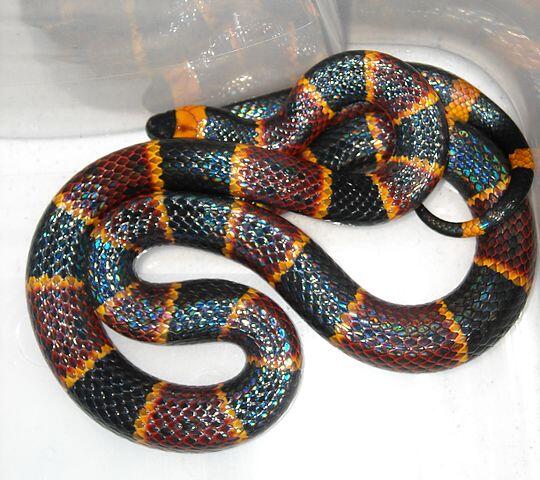
Eastern Coral Snake. Photo: Norman.benton via Wikimedia Commons
Other Snakes
| Name of Snake | Binomial Nomenclature | Geographic Range |
| 17. Desert Nightsnake | Hypsiglena torquata | British Columbia, Canada, western and southwestern United States, Mexico |
| 18. Cottonmouth (Water Moccasin) | Agkistrodon piscivorus | Southeastern United States |
| 19. Copperhead | Agkistrodon contortrix | Eastern to southeastern United States into southeast Texas |
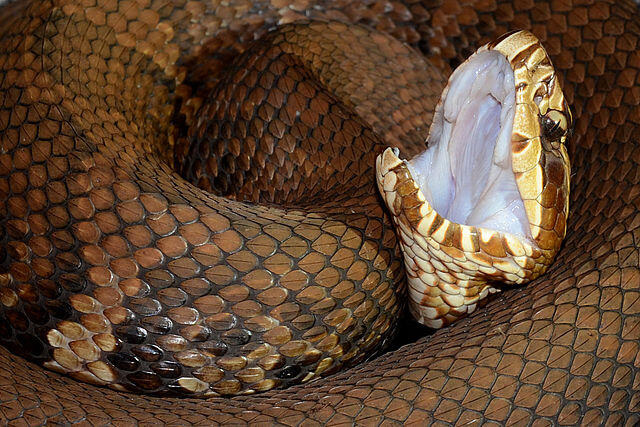
The Cottonmouth has a white mouth. Photo: Geoff Gallice from Gainesville via Wikimedia Commons
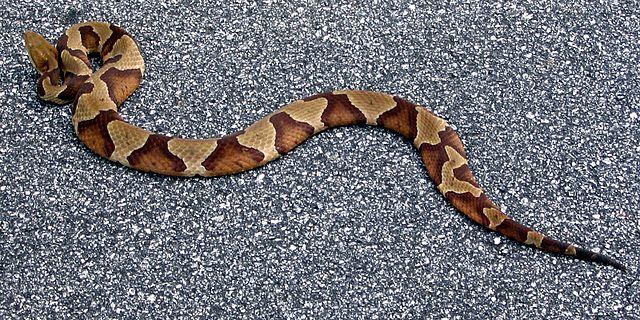
Copperhead. By Steve Karg (Own work) [CC y/2.5)], via Wikimedia Commons
How to Prevent Snake Bites
- Watch your step
- Wear long pants
- Avoid grasses
- Don’t mess with snakes
- Use a flashlight in the dark
- Be careful in rocky areas
Whenever we venture out into the wilderness, we are going into wildlife habitat. We must respect these creatures that contribute to a healthy ecosystem. If you take preventive measures, you will not have a dangerous encounter. Always know the snakes in your hiking area. If you do get bit by a venomous snake, your knowledge of the snake will be helpful to identify a proper anti-venom. Do not let your fear of snakes stop your from enjoying a great hike!
Have you had an experience with a venomous snake while enjoying the outdoors? Tell us your story in the comments below!
Sources:
http://en.wikipedia.org/wiki/List_of_fatal_snake_bites_in_the_United_States
http://cwf-fcf.org/en/discover-wildlife/resources/faq/faqs/venomous-snakes.html?referrer=https://www.google.com/
http://www.trailquest.net/SNpoi.html
https://sites.google.com/site/venomousdangerous/snakes/north-america-s-most-venomous-snakes
http://www.backyardnature.net/snakvenm.htm
http://survival.about.com/od/8/a/Common-Characteristics-Of-Venomous-Snakes-In-The-United-States.htm

- 6 Ways to Avoid Tick Bites While Summer Hiking - June 21, 2017
- 8 Affordable Mother’s Day Gift Ideas for Outdoorsy Moms - May 8, 2017
- Best Hiking Watches Under $100 - April 26, 2017
We write rarely, but only the best content.
