


New gear highlight: Vibram Arctic grip for walking on icy and wet surfaces
Though it’s July, and you may not be thinking about winter (yet), you will nonetheless be excited to know about Vibram’s latest creation, a special rubber sole that doesn’t slip on the ice.
I’ve been an avid user of Vibram soles for years. They’re great on rock and for hiking. Notably, the rubber for approach shoes is the best of it’s class: check out our review of Salewa Wildfire approach shoes, made with Vibram rubber, make it amazing on rock. However, like most rubber compounds, they are quite slick when it’s wet out, sliding easily on wet tree roots, mud and snow. Many times I’ve been more than just a little cautious, and nervous on wet rock and trails, since in the cold and wet, the soft rubber tends to harden, making a slip very possible.
But now that’s about to change with the new Arctic Grip.
New for Fall 2016
Vibram has announced the latest for Fall 2016: a special rubber sole, called Arctic Grip, which won’t slip on ice. These ‘thermo-chromatic’ lugs on these soles turn blue, and you may think it’s a marketing gimmick until you try them yourself. At this years Outdoor Retailer winter market, it showed attendees that this rubber can get a grip on ice that’s three times better than any other Vibram sole made so far.
The compound has been developed by Vibram over a period of two years. What is it? Though Vibram won’t reveal too much information on this proprietary compound, it does say that Arctic Grip is like “a rubber compound with an advanced filler system.” It’s designed to pack in the miles: it should last you over 200 miles on ice. the sole is sturdy and grippy, and feels a little odd to the touch – that’s because there is nothing out there like it.
Vibram introduced the product by allowing Outdoor show attendees to walk on a surface of pure ice with the soles. Check out the video below:
Vibram promises the new compound will allow you to discover a whole new world of performance on slippery, wet ice.
The sole is designed for enhanced durability, which will will improve longevity of the sole. Footwear with Arctic Grip soles will feature visually designated lugs and thermo-chromatic lugs, which work to sense temperature changes below freezing (0 Celcius, 32 F). Once that threshold temperature has been reached, the soles will change colour.
Each sole will be different dependent on the use it’s designed for. The appropriate lugs will vary, and will be designed specifically for the sport the shoe is intended for. For example, soles will be designed for hiking mountaineering, trail running or running, industrial, causal and so on.
The sole is specifically designed for wet ice. Other performance, slip resistant soles Vibram has made include IceTrek, which is suited for dry ice (great in cold conditions) and MegaGrip are made for wet and dry surfaces.
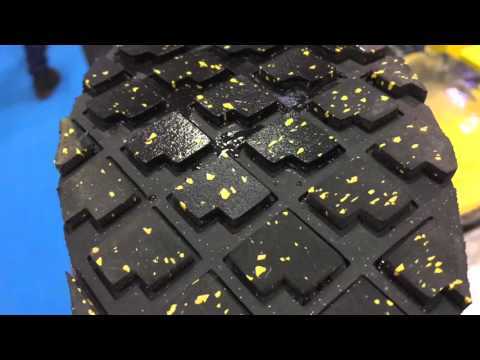
Detail of the Arctic Grip sole by Vibram. Check out the coloured ‘specks’ that change colour with temperature, indicating the rubber senses low temperatures. Image from Vibram.
Who will make the shoes to go with the soles?
Well you can see in the video that Vibram has added the sole to what looks like a pair of casual shoes. This is just an example to demonstrate the soles capability and not a true shoe for sale. The sole, however will be available from Vibram’s partners, including six Wolverine brands: Merrel, Saucony, Sperry, Cat Wolverine and Hush Puppies.
The following shoes will be available Fall 2016 (Source: us.Vibram.com):
- From CAT Hiking boots: Model name: CAT Stiction Hiker WP Ice +
- From Moab Hiking boots: Moab FST Ice + Thermo Waterproof
- From Saucony: Saucony Razor Ice + (we’ve excited about this one; a snow running shoe)
- From Wolverine Wolverine Cossbuck FX Ice+
- From Sperry: Sperry Cold Bay Ice+
- From Hush Puppies: Hush Puppies Parkview Ice+
Stay tuned to when these shoes hit the shelves this fall.
Vibram will offer the technology to a few other brands for sale in the 2017 fall/winter season. Blue and yellow specks in the rubber sole are just for show, and will change colour when the temperature drops.
Stay tuned!
In the meantime:

- How to experience the world while isolated at home - April 21, 2020
- How to prevent and treat hypothermia - February 21, 2019
- How to layer with your down jacket - November 28, 2018
We write rarely, but only the best content.
